What We Check and Why It Matters
Heating reliability starts with a grounded plan. We review drawings, maintenance logs, and recent service notes, then walk the plant to confirm nameplate data, combustion air, venting paths, and electrical protection. During your heating system inspection, we document the condition of boilers or heat pumps, primary-secondary piping, expansion tanks, air separators, strainers, and isolation valves—capturing both code items and practical service issues that affect comfort, uptime, and operating cost.
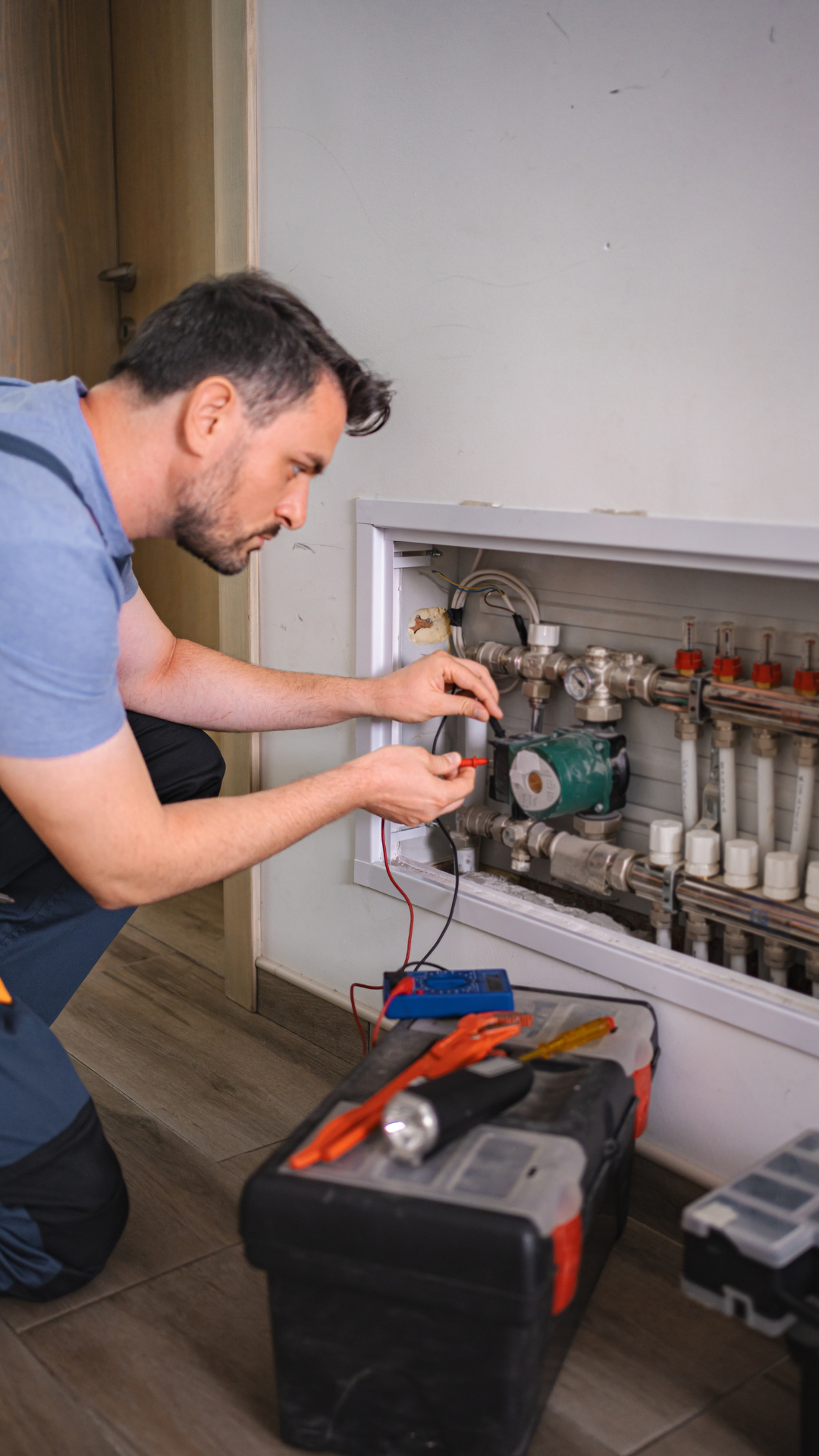
In live operation, we verify pump rotation and amperage, confirm setpoints against actual supply/return temperatures, and observe control sequences from call for heat through burner or compressor modulation. For hydronic plants, we check differential pressure, purge points, balancing devices, and automatic air vents. For steam, we examine pH, low-water cutoffs, gauge glass condition, vents, traps, and near-boiler piping. We also evaluate sensor placement and trend visibility so facilities can see emerging problems early, before tenants feel them as cold spots or slow recovery.
Safety is non-negotiable. We test safeties and interlocks, review combustion air and dilution strategies, and inspect relief valves, backflow prevention on makeup water, and condensate neutralization on condensing appliances. For fuel systems, we verify leak detection, valve labeling, tank venting, and bonding. Flue paths are checked for clearances, joints, supports, and draft. Where carbon monoxide monitoring is required, we confirm device locations, setpoints, supervision, and annunciation so alarms are both accurate and actionable.
Efficiency keeps operating budgets in line. We audit reset curves, night setback, and scheduling; validate insulation on distribution mains; and look for short-cycling triggers like oversized stages, poor differential settings, or fouled heat exchangers. If metering or submetering exists, we reconcile readings with run hours to flag anomalies. Findings are prioritized by risk, cost, and downtime impact, enabling phased action: address critical safety first, stabilize reliability next, then complete performance tuning that delivers fast, measurable payback.